
Why Do My Gums Bleed When I Brush? What Bleeding Gums Actually Mean
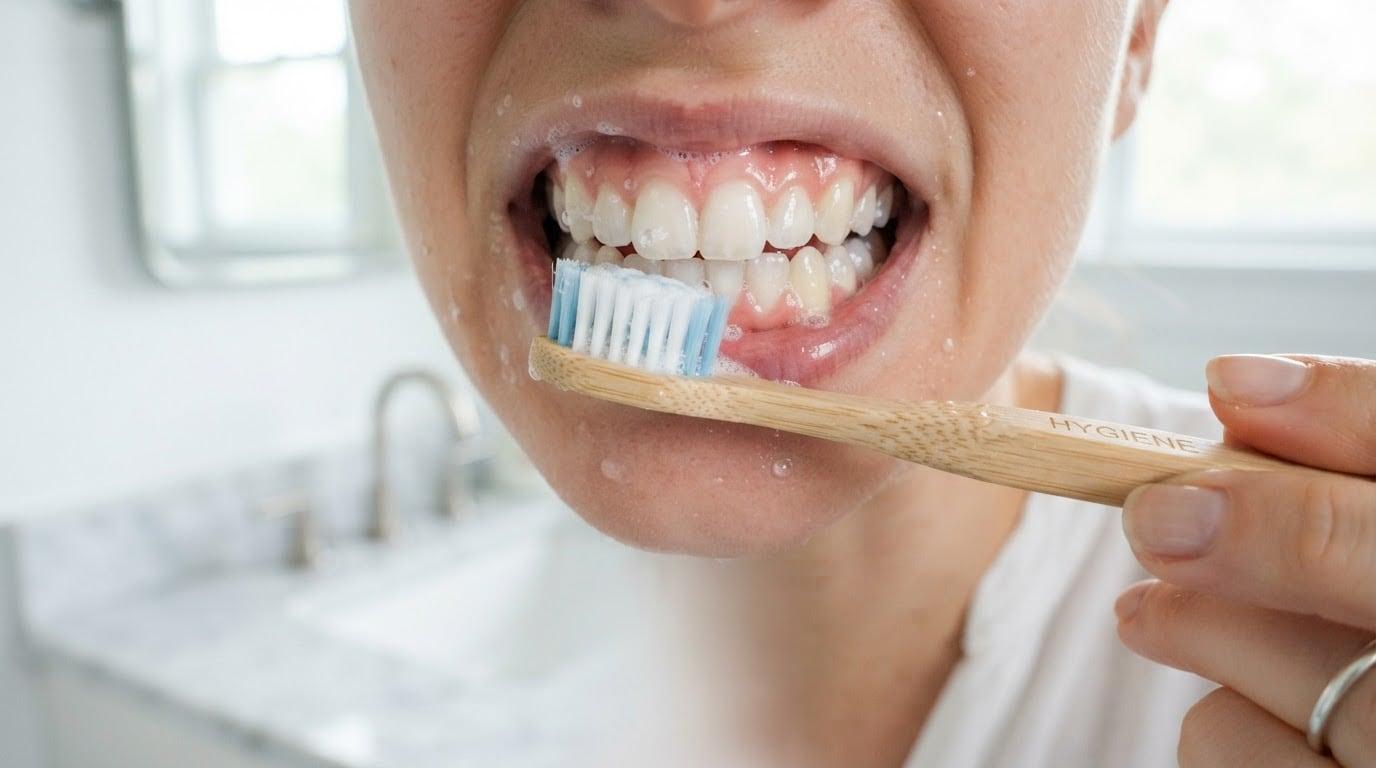
Most people who see blood in the sink after brushing decide one of two things. Either they brushed too hard, or it is just something that happens sometimes.
Neither is usually correct. Healthy gums do not bleed when you brush them, in the same way healthy skin does not bleed when you wash it. Bleeding is a sign of inflammation, and inflammation has a cause.
The good news is that at the earliest stage, this is one of the most reversible conditions in dentistry. The less good news is that it does not stay reversible forever.
What is actually happening when gums bleed
Plaque is a soft, sticky film of bacteria that forms on teeth constantly. It starts rebuilding within hours of brushing. That is normal and not in itself a problem, as long as it is removed daily.
When plaque sits along the gumline undisturbed, your immune system responds to the bacteria. Blood vessels in the gum tissue dilate and become fragile so that immune cells can reach the area. That is inflammation doing its job.
Fragile, swollen tissue bleeds easily. So the bleeding is not damage from your toothbrush. It is your body reacting to bacteria that have been left in place too long.
If plaque is not removed within a couple of days, it hardens into calculus, also called tartar. Tartar is rough, porous, and bonded to the tooth. You cannot brush or floss it off. It holds more plaque against the gum, which drives more inflammation, which creates more bleeding.
Gingivitis and periodontitis are not the same thing
This distinction matters more than almost anything else in this article.
Gingivitis is inflammation limited to the gum tissue. Gums are red, puffy, and bleed easily. Nothing has been permanently lost. With proper cleaning, professional and at home, gingivitis fully resolves. Tissue returns to normal.
Periodontitis is what gingivitis becomes if it continues. The inflammation spreads below the gumline and begins destroying the bone that holds your teeth in place. Gums pull away from teeth, forming pockets that trap more bacteria. Bone loss is permanent. It does not grow back on its own.
Periodontitis is the leading cause of adult tooth loss. Not decay. Gum disease.
The uncomfortable part is that periodontitis is often less obviously painful than a cavity. People lose significant bone without ever having a toothache. Bleeding when brushing is frequently the only early warning, which is exactly why it is worth taking seriously.
Common reasons gums bleed
Plaque along the gumline. By far the most common. Often it is a specific area that gets missed, such as the inside surfaces of the lower front teeth or the back of the last molars.
Not flossing, or having just started. If you have not flossed in a while and you start again, the gums will bleed for the first several days. That is inflammation present before you started, not damage from the floss. It usually settles within a week or two of daily flossing. If it does not, that is worth a conversation.
Tartar buildup. Once tartar has formed, home care cannot resolve it. This is the main reason "I will just brush better" often does not work on its own.
Hormonal changes. Pregnancy, puberty, and menstrual cycles can all increase gum sensitivity to plaque. Pregnancy gingivitis is common and real, and dental care during pregnancy is both safe and important.
Smoking and vaping. Worth knowing: nicotine constricts blood vessels, which can mask bleeding. Smokers often have less bleeding and more underlying disease. Absence of blood is not reassurance here.
Medications. Blood thinners, some blood pressure medications, and certain anti-seizure drugs affect gum tissue or bleeding. Always tell your dentist what you take.
Diabetes. The relationship runs both ways. Poorly controlled blood sugar makes gum disease worse, and active gum disease makes blood sugar harder to control.
Vitamin deficiency. Genuine vitamin C deficiency causes gum bleeding, though it is uncommon in most diets.
Why ignoring it is a poor bet
Gum disease progresses quietly. There is rarely a dramatic moment that forces action. People tend to notice when a tooth feels loose, and by then substantial bone has already gone.
There is also a growing body of research connecting periodontal disease to cardiovascular disease, diabetes, and adverse pregnancy outcomes. The mechanisms are still being worked out, and it would be overstating things to say gum disease causes heart disease. But chronic inflammation in your mouth is not isolated from the rest of your body.
The practical point stands on its own. Treating gingivitis is straightforward. Treating periodontitis is longer, more involved, and cannot undo bone that is already lost.
What to do at home
Brush twice daily for two full minutes, angling the bristles at about 45 degrees toward the gumline rather than straight at the tooth. The gumline is where it matters.
Use a soft brush and gentle pressure. Hard brushing does not help and causes its own problems. Electric brushes with a pressure sensor genuinely help people who press too hard.
Clean between your teeth daily. Floss, interdental brushes, or a water flosser. Brushing physically cannot reach between teeth, and that is exactly where gum disease usually starts. Interdental brushes are often easier and more effective than floss if you have the spaces for them.
Keep going through the bleeding. If you have just started flossing, gently continuing is the right move. Stopping because it bleeds keeps the cycle going.
Do not rely on mouthwash to fix it. Rinses can reduce bacteria but cannot remove plaque or tartar. Mouthwash is a supplement to mechanical cleaning, not a replacement.
When to see a dentist
Book an appointment if:
- Bleeding continues after two weeks of consistent, proper home care
- Your gums are swollen, tender, or have pulled away from your teeth
- You have persistent bad breath or a bad taste
- Teeth feel loose, or your bite feels like it has changed
- You notice pus, or a spot on the gum that looks like a pimple
- You have diabetes, are pregnant, or take blood thinners and have noticed bleeding
Tartar has to be removed professionally. There is no way around that.
What treatment usually involves
For gingivitis, a professional cleaning to remove plaque and tartar above and just below the gumline, plus a review of home technique. The improvement is often noticeable within a couple of weeks.
For periodontitis, a deeper cleaning called scaling and root planing, which cleans the root surfaces inside the pockets, usually with the area numbed. More advanced cases may need additional treatment. Ongoing maintenance visits, often more frequent than standard cleanings, keep it stable.
Stable is the realistic goal with periodontitis. Cured is not, which is the strongest argument for dealing with bleeding gums while they are still just bleeding gums.
The short version
Gums that bleed are inflamed, and inflammation is caused by bacteria left along the gumline. At the gingivitis stage it is completely reversible. Once it becomes periodontitis, bone loss is permanent.
Two weeks of genuinely good home care should make a visible difference. If it does not, there is likely tartar below the gumline that needs professional removal.
Gums bleeding when you brush?
Diamond Dental Group can assess what stage this is at and treat it properly. Call (916) 755-4769 to schedule a cleaning and exam.
This article is for general educational purposes and is not a substitute for professional dental advice, diagnosis, or treatment. Every patient is different. Please consult your dentist about your specific situation.