
What to Eat After Dental Implant Surgery: A Day-by-Day Guide for the First Two Weeks
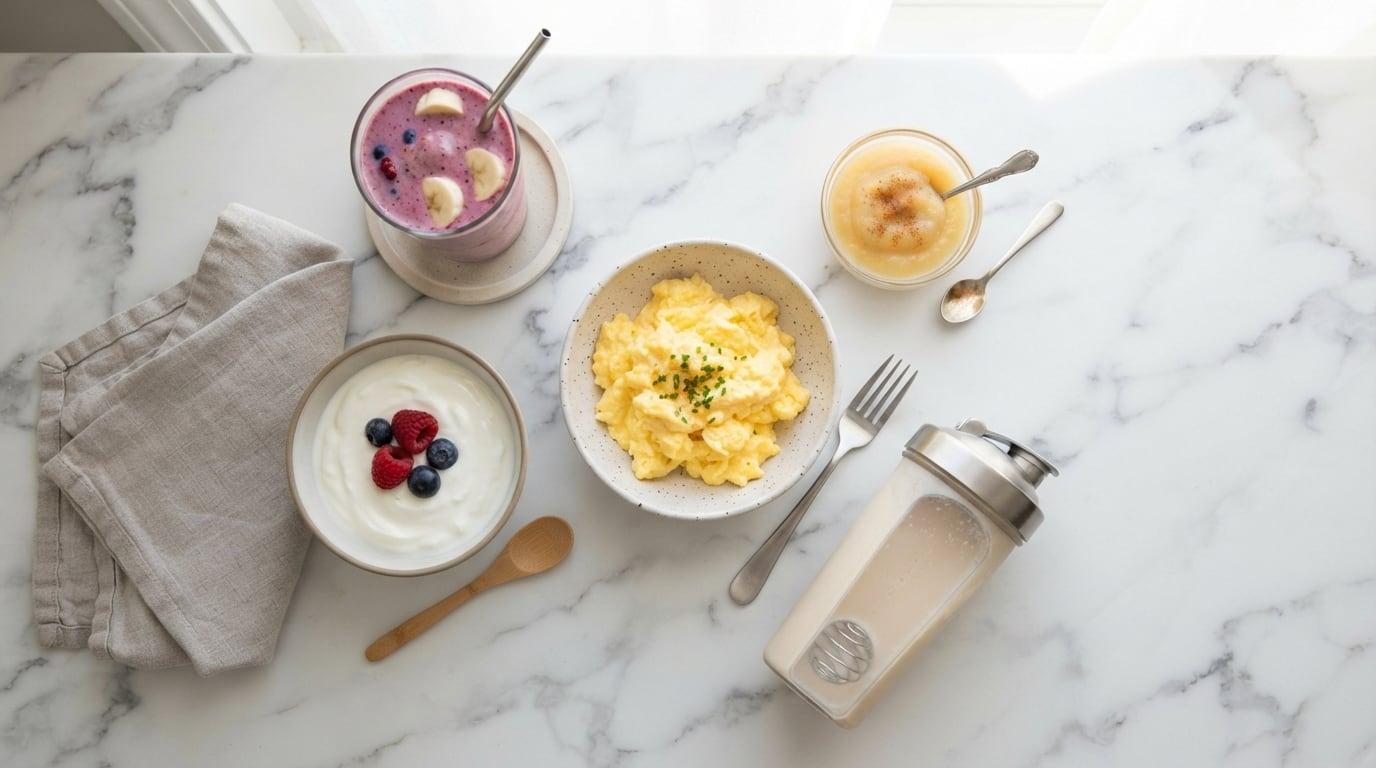
You have just had dental implant surgery. The anesthetic is beginning to wear off, you are holding a folded piece of gauze against the site, and somewhere in the discharge instructions is a line that says "stick to soft foods." Helpful, but not very specific. Soft for how long? Is yogurt fine on day one? When can you have a sandwich again?
This guide walks through the first two weeks meal by meal, so you are not guessing in your own kitchen.
Why food matters more than people expect
A dental implant is a small titanium post placed into your jawbone. Over the following weeks and months, bone grows around it and locks it in place — a process called osseointegration. That fusion is what makes an implant strong enough to last decades.
In the early days, the site is still healing soft tissue and forming the blood clot that protects the surgical area. Chewing on it too early, disturbing the clot, or letting food pack into the site can slow healing or introduce bacteria. Eating carefully for a couple of weeks protects an implant you will use for the rest of your life. It is a small trade.
Day 1: liquids and very cold things
For the first 24 hours, do not chew on the surgical side at all. Cold helps control swelling, so lean into it.
Good choices: smoothies, protein shakes, cold soups such as gazpacho, plain yogurt, applesauce, pudding, lukewarm broth, ice cream or sorbet.
Avoid entirely: anything hot, anything crunchy, and — importantly — drinking through a straw. The suction can pull the forming blood clot out of the site, which is painful and delays healing. Spoon your smoothie instead.
Also skip alcohol and stay off any food that requires real jaw movement. Small, frequent amounts are easier than one large meal.
Days 2 to 3: soft, no chewing required
Swelling usually peaks around day two or three. That is normal. You can begin adding foods with a bit more substance, as long as they collapse under a fork without effort.
Good choices: scrambled eggs, mashed potatoes, oatmeal or cream of wheat, hummus, refried beans, mashed avocado, cottage cheese, silken tofu, well-cooked pasta in a smooth sauce, blended soups.
Still avoid: anything with seeds, grains, or small particles that can lodge in the site. That includes strawberries, sesame seed rolls, quinoa, and rice. Keep everything warm rather than hot, since heat can increase swelling and bleeding.
Rinse gently with warm salt water after eating, starting the day after surgery or whenever your dentist advises. Let the water fall out of your mouth rather than spitting forcefully.
Days 4 to 7: soft, with gentle chewing on the other side
By the end of the first week most people feel noticeably better. You can chew, but keep everything on the opposite side of your mouth from the implant.
Good choices: flaked fish, ground meat in sauce, soft pasta dishes, macaroni and cheese, steamed vegetables cooked until they yield easily, ripe banana, canned peaches, soft bread without crust, risotto.
Still avoid: crusty bread, chips, popcorn, nuts, raw carrots and apples, tough steak, chewy bagels, sticky candy, and anything spicy or acidic that will sting healing tissue.
This is also the week people get overconfident. Feeling better is not the same as being healed. The bone underneath is still at a very early stage.
Week 2: expanding carefully
In the second week you can return to most of your normal diet, with two ongoing rules: still chew away from the implant, and still avoid the genuinely hard and crunchy category.
Now reasonable: soft sandwiches, tender chicken, casseroles, most cooked vegetables, softer fruits, eggs in any form, soft tacos.
Keep waiting on: nuts, hard candy, ice, popcorn kernels, raw crunchy vegetables, tough or chewy cuts of meat, and crusty artisan bread.
When can you eat completely normally again?
This is the part most guides skip. There are two different milestones.
Soft-tissue healing takes roughly one to two weeks. That is when the gum has closed and daily eating feels comfortable again.
Bone integration takes considerably longer — typically three to six months, depending on the site, your bone quality, and whether a graft was needed. During that stretch the implant is fusing to the jaw.
Whether you can chew normally in the meantime depends on how your case was treated. If you received a temporary crown or a healing cap, your dentist will tell you what that temporary restoration can handle — usually less than you would expect. If the site was left to heal under the gum, there is nothing to chew on and the rule is simply to stay off it.
Once the final crown is placed and your dentist confirms integration, the implant is designed to handle normal biting force. At that point most people eat whatever they like.
Ask your own dentist for your timeline. Cases genuinely differ, and a full-arch restoration follows a different schedule than a single implant.
Protein matters while you are eating soft
A soft diet is easy to under-eat, and healing tissue needs protein. If you find yourself living on applesauce and mashed potatoes for a week, add Greek yogurt, protein shakes, eggs, cottage cheese, blended lentil soup, or silken tofu. Staying hydrated helps as well.
Signs to stop and call
Contact your dentist promptly if you notice:
- Pain that is increasing after day three rather than easing
- Swelling that worsens after day three
- A bad taste, discharge, or persistent bad odor from the site
- Bleeding that does not settle with gentle pressure
- Fever
- The implant or temporary crown feeling loose or moving
None of these are reasons to panic, but all are reasons to be seen rather than to wait it out.
The short version
Day 1, cold liquids and no straws. Days 2 to 3, soft foods that need no chewing. Days 4 to 7, gentle chewing on the opposite side. Week 2, most normal foods minus the hard and crunchy. Then follow your dentist’s guidance on when full function returns.
Two weeks of care protects something built to last decades.
Considering dental implants in Roseville? Diamond Dental Group provides implant, cosmetic and family dentistry with clear explanations at every stage — including exactly what recovery will look like for your case. Call (916) 755-4769 or book online to schedule a consultation.
This article is general education, not personal medical advice. Always follow the post-operative instructions given by your treating dentist.